
Top Signs You Need Garage Door Service – Don’t Ignore These
A garage door that takes three seconds longer to open than it did six months ago isn’t “getting old.” It’s a measurable indicator of increased friction load, and that load is quietly shortening the life of your springs, cables, and opener motor at the same time. The warning signs are almost always there weeks before the breakdown. They’re just easy to dismiss because the door still technically works. That’s the trap: a garage door rarely fails without warning, but the warnings don’t announce themselves. Here are the signals worth paying attention to, ranked by how urgently they need action.
If reading this has you thinking “that’s my door,” call us at (866) 353-3562. We answer 24/7, and fast dispatch runs 7am to 7pm. Estimates are free.
Warning Sign #1: The Door Got Slower (or Louder) and You Shrugged It Off
Slow operation and new noise are the two most-dismissed signals we see, and both point at the same thing: friction. A door should move at roughly the same pace and volume it did the month before. When it doesn’t, something has changed in the mechanical system, and the cause is usually one of these:
- Dry or worn rollers. Metal rollers wear flat spots; nylon rollers crack. Both drag against the track and force the opener to work harder on every cycle.
- Loose or misaligned track. A track that’s out of true binds the door on one side, so the opener strains against a resistance that wasn’t there before.
- Springs losing tension. Torsion and extension springs weaken gradually. The door gets heavier without ever looking different, so the opener carries a load it was never sized for.
- A grinding or scraping sound. That’s metal-on-metal. Ignoring it grinds the track, the roller stems, and eventually the panels themselves.
Here’s the mechanical point most people miss: when the opener fights friction, it burns out its gear and motor faster. When springs weaken, the opener takes the extra weight. One neglected drag point taxes three systems at once, which is why a door that “just needs a little oil” so often turns into a spring or opener repair in Richmond a few weeks later. A door that’s genuinely aging sounds the same on day 200 as day 20. A door that’s failing sounds different every week.
What Do Frayed Cables Look Like? The Safe Inspection You Can Do From the Ground
You can check your cables safely without touching anything, and it takes about a minute. Stand back and look at the vertical cables running down each side of the door. What you’re looking for:
- Fraying or a “birdcage” bulge where the strands separate and splay outward. That cable is on its way out. Cables don’t fray gradually and then heal; once the strands separate, failure is a matter of cycles.
- Rust staining or discoloration along the cable run, which points to moisture getting into the strands.
- A cable that’s jumped its drum at the top of the door, visibly off its groove.
- Sagging on one side, where one cable looks looser than its partner.
What you should not do is touch, tension, or re-spool a cable yourself. Cables hold the door’s full weight in tension, and a released cable can whip with enough force to cause serious injury. Springs, cables, and the hardware they connect are the parts of a garage door that genuinely hurt people. If you see fraying, stop using the door and have a trained technician look at it. Our technicians have up to 14 years of experience with torsion and extension systems, and we’d rather inspect a cable you’re worried about than repair the damage a snapped one leaves behind.
The Asymmetry Test: How a Door That Gaps Unevenly Reveals a Spring Problem
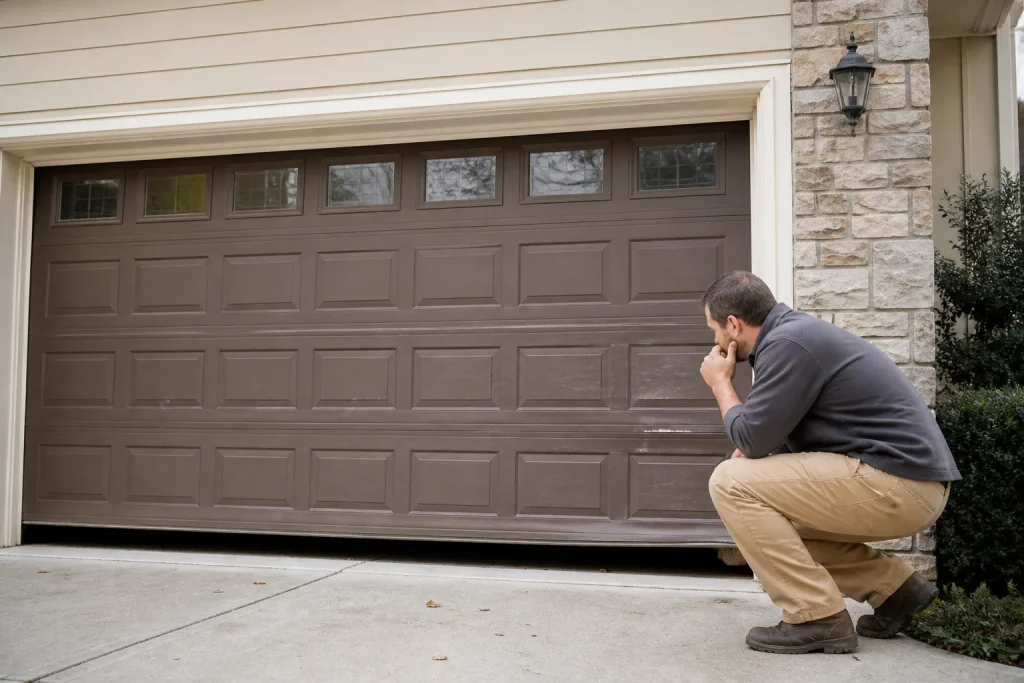
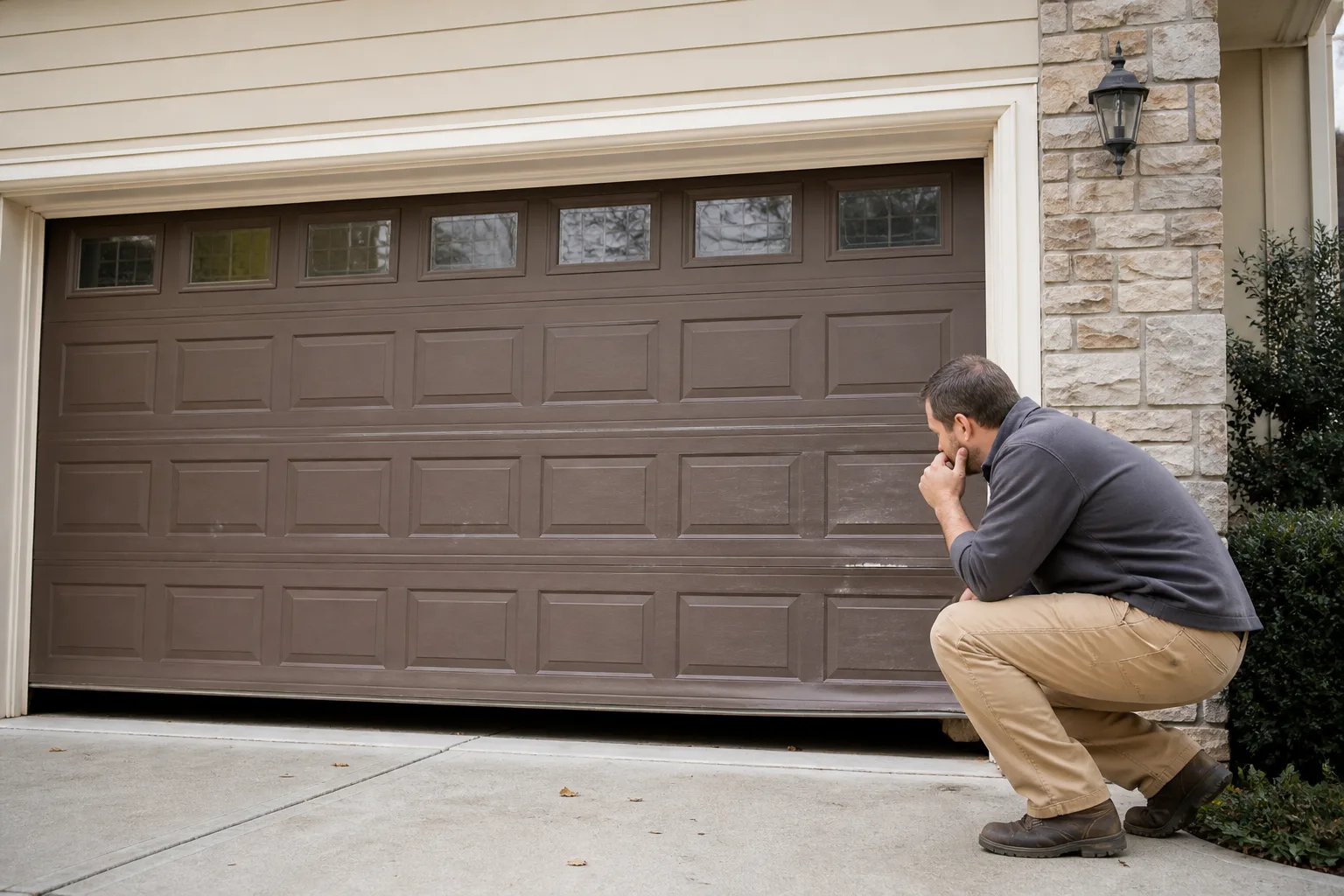
Close the door and look at the gap along the bottom. It should sit level across its full width. If one side sits noticeably higher, or the door looks slightly crooked as it rises, that’s a tension imbalance between the two springs, and it’s one of the most useful early warnings a homeowner can catch.
Why it matters: a matched pair of springs is designed to carry the door evenly, one side each. When one weakens before its partner, the stronger side lifts more. The door racks slightly in its tracks on every cycle, which wears the rollers, stresses the panels, and puts the opener at an angle it wasn’t built for. Left alone, the weaker spring usually breaks first. This is also why a matched pair gets replaced together: putting one new spring next to a worn one recreates the same imbalance you just paid to fix.
If your door gaps more on one side in Richmond, don’t wait for the bang. A spring imbalance is a scheduled-appointment problem right now, not an emergency yet. A free estimate will tell you whether you need one spring or the pair, and the written quote – agreed before any work starts – is the price.
Opener Warning Signs: Hesitation, Motor Noise, and Shrinking Remote Range
Your opener is telling you things before it quits. Each symptom points somewhere specific:
- Hesitation before the door moves. The motor pauses, then engages. That’s often a failing capacitor, a strained gear, or a logic board struggling to send the command.
- A new grinding or humming with no movement. Frequently a stripped drive gear or a worn belt or chain. The motor runs; the door doesn’t.
- Shrinking remote range. If you used to open the door from the end of the driveway and now you’re practically touching the panel, the receiver or the remote’s battery is weakening. Sometimes the logic board’s antenna connection is the culprit.
- The door reverses for no reason, or the wall button works but the remote doesn’t. That’s a signal or safety-sensor issue, not a motor failure.
We work on the brand you already own. LiftMaster, Chamberlain, Genie, and Craftsman units, including the Wi-Fi and smart-home-connected models, are all in our wheelhouse, and a diagnostic tells you whether you’re looking at a part or a replacement. If your door is hesitating in Richmond, that’s a call-us-now situation rather than a wait-and-see, because a sticky opener left alone tends to fail with the door in the up position.
Ranking the Signs: When to Schedule vs. When to Stop Using the Door
Not every warning is urgent, and knowing the difference saves you an emergency call and possibly a repair bill. Here’s how we’d sort them.
Stop using the door immediately – call now
- A snapped spring (you’ll hear a loud bang and the door may not lift at all).
- A visible fray or bulge in a cable.
- The door hanging crooked or off its track.
- The door reversing or failing to close fully (a genuine security and safety risk).
- A door that’s stuck open or stuck shut. Emergency garage door service exists for exactly this.
Schedule an appointment soon
- Slower or louder operation than last month.
- A level gap that’s gone crooked.
- Opener hesitation or shrinking remote range.
- Grinding, squealing, or scraping on the move.
General maintenance, not a repair
- A single squeak that responds to proper lubrication of the rollers, hinges, and springs.
- Annual hardware inspection, which we recommend for any door in daily use.
When to call a pro: anything in the first two lists. Spring and cable work is the highest-risk part of this trade, and it’s the part most generalists defer. We don’t. Garage doors only for us. No plumbing, no HVAC – just doors.
Why Catching These Signs Early Matters in Richmond
Richmond’s humidity swings do garage doors no favors. The seasonal moisture and temperature changes work on wood panels, metal tracks, and the lubricant in your rollers, which is why hardware checks matter more here than in a dry climate. A door that’s binding slightly in July can be grinding metal on metal by October.
Catching it early changes the fix. A worn roller or a loose track is a small repair. Left alone, that same drag point takes out a spring, then the opener. Our technicians have up to 14 years of experience, and we’ve seen every version of “I thought it was just getting old.” Factory-familiar with the brands homeowners actually own, from Clopay panels to Wayne Dalton doors to Raynor and Amarr installations, we’re never guessing at parts or procedures. If it’s a LiftMaster opener that’s hesitating, we know the failure points. If it’s a Wayne Dalton door that’s drifting, we know the track layout.
The Bottom Line
Most garage door failures announce themselves weeks ahead through slow operation, new noise, uneven gaps, frayed cables, and opener hesitation. The trick is reading those signals as mechanical data rather than background wear. If a sign from the “stop using” list is on your door right now, don’t run it again. If it’s from the “schedule soon” list, get a free estimate and lock in the written price before it becomes an emergency.
If you’re in Richmond and need help, Richmond Garage Door Repair Pros offers free estimates – call (866) 353-3562. We answer 24/7, with fast dispatch from 7am to 7pm. The price is quoted and agreed before any work starts, so the invoice won’t surprise you.
Related services in Richmond: garage door repair, garage door opener repair, garage door installation, and spring work. You can also learn more about Richmond Garage Door Repair Pros.
Frequently Asked Questions
You need repair if the door operates differently than it did last month – slower, louder, crooked, or hesitating. You need maintenance if it operates the same as always and just needs lubrication and a hardware check. A free estimate sorts which one you’re facing. Call (866) 353-3562, and estimates are free.
It sounds like a loud bang, like a firecracker, and the door often won’t lift or sits heavy. If you hear that, stop using the door entirely. A snapped spring leaves the full weight of a door that can be hundreds of pounds on the opener, and it won’t hold it. Call us for emergency service. We answer 24/7, with fast dispatch from 7am to 7pm. Estimates are free.
Lubricating a squeak is fine, but if a lubricated door is still slow or dragging, the cause is mechanical, not lubrication. Oiling doesn’t fix a worn roller, a loose track, or a weakening spring. It just quiets the symptom while the wear continues. Call (866) 353-3562 for a free estimate before the drag point turns into a bigger repair.
Yes. A hesitating opener is a failing component, and it tends to quit at the worst possible moment, often leaving the door stuck open. A diagnostic tells you exactly what’s failing before it does. Call (866) 353-3562. Estimates are free, and the price is set by the written estimate before any work begins.
Written by the team at Richmond Garage Door Repair Pros.
Need Garage Door Help?
Call Richmond Garage Door Repair Pros - the local pro we connect you with is licensed and insured, here with fast help in Richmond.
(866) 353-3562